
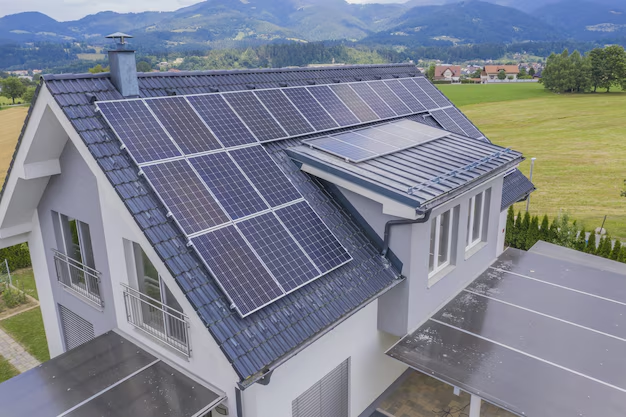
Solar System Installation in Pakistan: A Complete Beginner’s Guide (2026)
Thinking about going solar but don’t know where to start? This guide explains everything in simple language — no technical jargon, no confusion.
Why Pakistanis Are Going Solar in Millions
If you live in Pakistan, you already know the pain. Electricity bills that arrive like a monthly nightmare. Load shedding that disrupts your work, your sleep, and your children’s studies. And a sense that no matter how little you use, the bill keeps climbing.
This is exactly why millions of Pakistani households and businesses have turned to solar energy. A rooftop solar system gives you the power to generate your own electricity from sunlight — for free — and dramatically reduce or even eliminate your dependence on the national grid. Once installed, the sun does the work. Every single day.
But for most beginners, solar feels complicated and confusing. What size system do you need? What equipment should you buy? How does installation work? How much does it all cost? This guide answers every one of those questions in plain, simple language.
First, Understand the Three Types of Solar Systems
Before you spend a single rupee, you need to know that there are three types of solar systems available in Pakistan. Choosing the wrong one is one of the most common and expensive mistakes beginners make.
1. On-Grid Solar System (Grid-Tied)
This type of system is connected to the national electricity grid. During the day, your solar panels generate electricity and power your home or business. If you produce more than you need, the surplus is exported to the grid — and under NEPRA’s net metering/net billing framework, you get credited for it on your bill. At night, or on cloudy days, you draw electricity from the grid as normal.
The advantage: this is the most cost-effective system because you do not need expensive batteries. The disadvantage: if there is a power outage (load shedding), your system automatically shuts off for safety reasons, even if the sun is shining. This is a fundamental safety requirement — it prevents electricity from flowing back into grid lines while workers may be repairing them.
On-grid is best for: areas with relatively stable grid supply, businesses, and anyone whose main goal is to reduce their electricity bill through net metering.
2. Off-Grid Solar System
This system is completely independent from the national grid. It runs your home or business entirely on solar power during the day and stores excess energy in batteries for use at night. There is no connection to WAPDA or any DISCO.
The advantage: complete energy independence and protection from load shedding. The disadvantage: batteries are expensive, add significantly to your upfront cost, and need replacement every few years.
Off-grid is best for: remote areas where the grid does not reach, farms, factories in areas with severe load shedding, and anyone who wants total independence from the power sector.
3. Hybrid Solar System
A hybrid system combines the benefits of both. It is connected to the grid but also has a battery backup. During the day it runs on solar, charges the batteries, and exports surplus to the grid. During load shedding, it switches to battery power automatically. At night, it draws from batteries first, then from the grid if needed.
The advantage: the best of both worlds — bill savings plus backup power. The disadvantage: it is the most expensive option upfront due to the cost of batteries and a more sophisticated inverter.
Hybrid is best for: most urban Pakistani households who want both bill reduction and uninterrupted power supply.
For most beginners in cities and towns, a hybrid system is the most popular and practical choice in 2026.
Key Components of a Solar System — What You Are Actually Buying
A solar system is not just panels on a roof. It is a combination of several components that work together. Understanding each one helps you make smarter purchasing decisions and avoid being overcharged.
Solar Panels
These are the flat rectangular panels that sit on your roof and convert sunlight into direct current (DC) electricity. Panels are rated in watts — a 580W panel means it can produce 580 watts under ideal sunlight conditions. More watts per panel means fewer panels needed to meet your requirement.
In Pakistan, the most popular and trusted panel brands in 2026 are Jinko Solar, LONGi, JA Solar, Canadian Solar, and Trina Solar. These are Tier-1 manufacturers with proven track records. Avoid unknown Chinese brands with no warranty documentation — cheap panels often degrade rapidly in Pakistan’s intense summer heat.
Inverter
This is the brain of your solar system. The inverter converts the DC electricity produced by your panels into alternating current (AC) electricity that your home appliances can actually use. For a hybrid system, the inverter also manages battery charging and grid interaction.
Popular inverter brands in Pakistan include Huawei, Sungrow, Growatt, Sofar Solar, Deye, and Inverex. Your inverter brand matters enormously — a poor inverter can fail within a year and cost you Rs. 200,000 to 500,000 to replace.
Batteries (for Hybrid or Off-Grid Systems)
Batteries store the solar energy produced during the day for use at night or during load shedding. There are two main types used in Pakistan: lithium iron phosphate (LiFePO4) batteries, which are modern, long-lasting, and low-maintenance but expensive, and lead-acid batteries, which are cheaper but heavier, require maintenance, and have a shorter lifespan.
If your budget allows, always go for lithium batteries. They last significantly longer and perform better in Pakistan’s climate.
Mounting Structure
This is the metal framework that holds your panels on your roof. It seems basic, but it matters a great deal. A poorly built mounting structure can be damaged by wind or monsoon rains, causing panels to shift or fall. Always insist on galvanized steel or aluminum structures with proper wind load ratings.
Wiring and Protection Equipment
DC cables, AC cables, circuit breakers, surge protection devices (SPDs), and a proper DB (distribution box) complete the system. NEPRA and DISCO inspectors specifically check for surge protection during net metering approvals. Skimping on protection equipment is a false economy — a single lightning strike or grid surge can destroy your inverter without it.
What System Size Do You Need?
This is the most common question beginners ask. The answer depends entirely on how much electricity you consume.
The starting point is your electricity bill. Look at your last three to six months of bills and find your average monthly units consumed — this is shown as kWh on your bill. Then use this rough guide:
A household consuming 300 to 500 units per month generally needs a 5 kW system. A household consuming 500 to 800 units per month generally needs an 8 to 10 kW system. A household consuming 800 to 1,200 units per month generally needs a 12 to 15 kW system. Commercial or industrial consumers should consult a certified solar engineer for a proper load analysis.
One important rule: your solar system size cannot exceed your sanctioned load — the official load capacity registered with your DISCO on your electricity connection. If your sanctioned load is 5 kW, you cannot install a 10 kW solar system without first getting your sanctioned load upgraded. Always check your bill before calling a solar company.
How Much Does a Solar System Cost in Pakistan in 2026?
Solar prices in Pakistan have come down dramatically over the past three years due to falling Chinese panel prices. Here is a rough cost guide for 2026. Keep in mind these are approximate figures — prices vary by brand, installer, and location.
A 5 kW on-grid system without batteries typically costs between Rs. 600,000 and Rs. 900,000 installed. A 5 kW hybrid system with lithium battery backup costs between Rs. 1,000,000 and Rs. 1,500,000 installed. A 10 kW hybrid system costs roughly Rs. 1,800,000 to Rs. 2,500,000 installed. A 15 kW hybrid system for larger homes or small businesses runs between Rs. 2,500,000 and Rs. 3,500,000 installed.
These prices include panels, inverter, mounting structure, wiring, and installation labor. Net metering application fees and the green meter cost are additional — budget roughly Rs. 100,000 to Rs. 150,000 extra if you intend to apply for net metering.
The Solar Installation Process — Step by Step
Once you have decided to go solar, here is exactly how the process works from start to finish.
Step 1: Site Survey
A certified solar installer visits your home or business to assess your roof space, direction, shading from trees or adjacent buildings, your current electrical setup, and your energy consumption. A south-facing roof with no shading is ideal in Pakistan. Based on this, they design your system and prepare a quotation.
Step 2: Get Multiple Quotations
Never accept the first quotation you receive. Get at least three quotes from different installers. Compare not just the price but the brand of panels and inverter being offered, the warranty terms, and whether the installer is certified by the Pakistan Engineering Council (PEC) or AEDB (Alternative Energy Development Board). Cheap quotes often use inferior equipment.
Step 3: Finalize and Sign Contract
Once you have chosen your installer, sign a formal contract that clearly specifies the equipment brands and model numbers, the system size, installation timeline, warranty terms, and who is responsible for the net metering application.
Step 4: Equipment Procurement and Installation
The installer procures your equipment and typically completes physical installation within two to five days for a residential system. Panels are mounted on your roof, cables are run to the inverter, the inverter is installed (usually indoors or in a shaded outdoor location), and the system is connected to your home’s electrical panel.
Step 5: System Commissioning and Testing
Once installed, the system is tested to ensure it is generating correctly, the inverter is reading production accurately, and all protection devices are functioning. At this stage your solar system is live and powering your home — even before net metering is applied for.
Step 6: Net Metering Application (Optional but Recommended)
If you want to export surplus electricity to the grid and get credit on your bill, you need to apply for a net metering license through your local DISCO. Your installer usually handles the paperwork. The application involves submitting technical documentation, a load flow diagram prepared by a PEC-certified engineer, inverter datasheets, property documents, and your CNIC. A DISCO inspector then visits to verify your installation, after which your file goes to NEPRA for a generation license, and finally your green (bidirectional) meter is installed. This process typically takes two to four months.
What to Watch Out For: Common Mistakes Beginners Make
The solar market in Pakistan has grown rapidly, and unfortunately not all installers are trustworthy. Here are the most important mistakes to avoid.
Buying on price alone is the number one trap. An installer offering a 10 kW system for Rs. 800,000 when the market rate is Rs. 2,000,000 is either using substandard panels, a cheap unreliable inverter, or simply cutting corners everywhere. You will regret it within two years.
Not asking for warranty documentation is another serious mistake. Reputable Tier-1 panels come with a 25-year performance warranty from the manufacturer. Your inverter should have a minimum five-year warranty, ideally ten. Always ask for the original warranty card and keep it safely.
Oversizing your system beyond your actual consumption sounds like a good idea but under the new net billing rules it actually hurts you financially. Extra units exported to the grid now earn a very low buyback rate. Size your system to match your actual daytime usage, not your imagination.
Ignoring the quality of mounting structure and wiring is a false economy. These components protect a multi-hundred-thousand-rupee investment. Cheap wiring degrades in the sun and heat, creating fire hazards. A flimsy mounting structure can collapse in Lahore’s pre-monsoon winds.
Not verifying your installer’s certification is risky. Always ask whether the installer is registered with PEC or AEDB. Unregistered installers cannot legally prepare the technical documentation required for DISCO and NEPRA approvals.
Is Solar Still Worth It in 2026?
Given all the regulatory changes and the reduced net metering buyback rates, many beginners are now asking: is going solar still a smart decision?
The honest answer is yes — but with a smarter strategy than before. The key insight for 2026 is that self-consumption is far more valuable than exporting to the grid. Every unit you generate and use yourself saves you Rs. 40 to 60 (whatever your grid tariff is). Every unit you export earns you only Rs. 8 to 11. So the smart move is to maximize your use of solar electricity during the day.
Run your air conditioners, water pump, geyser, washing machine, and other heavy appliances during solar hours — roughly 8 AM to 5 PM. If you have a hybrid system with batteries, store midday surplus for evening use instead of exporting it. Size your system to match your actual daytime consumption rather than your total monthly bill.
With this approach, a good quality solar system in Pakistan can still pay for itself in four to six years — and then give you fifteen to twenty more years of dramatically reduced electricity bills. In a country where electricity tariffs have been rising by 20 to 30 percent every few years, that is one of the best investments any Pakistani household or business can make.
Quick Summary: Your Solar Checklist as a Beginner
Before you take any step, use this simple checklist:
Check your average monthly electricity consumption from your past six bills. Check your sanctioned load from your bill to know your system size limit. Decide which system type suits you: on-grid, off-grid, or hybrid. Get at least three quotations from PEC or AEDB-certified installers. Ask each installer for the specific panel and inverter brands and model numbers. Verify warranty documentation for all major equipment. Sign a written contract before any payment. Plan your high-consumption appliances around solar hours. If applying for net metering, budget extra for the green meter and application process.
Final Word
Solar energy is not a luxury for the rich in Pakistan anymore. It has become a practical, financially smart decision for millions of ordinary households and businesses. Yes, the regulations have changed. Yes, the process takes time and patience. But the sun rises every single day over Pakistan — and with the right system and the right installer, it can power your home, protect you from rising bills, and give your family genuine energy independence for decades to come.
Take your time, do your research, and make an informed decision. The investment you make today will thank you every month for the next twenty years.